Born 1977 · Lake Clark, Alaska
About the Artist — Erik David Behnke
For 25 years, Erik David Behnke was one of Alaska's most celebrated artists. Born to parents trapping in the Lake Clark wilderness, he experienced Down syndrome and autism — and through ink, color, and the natural world that surrounded him, he found a voice that reached galleries from Boston to Manhattan.
This is his story.
Chapter One
Beginnings
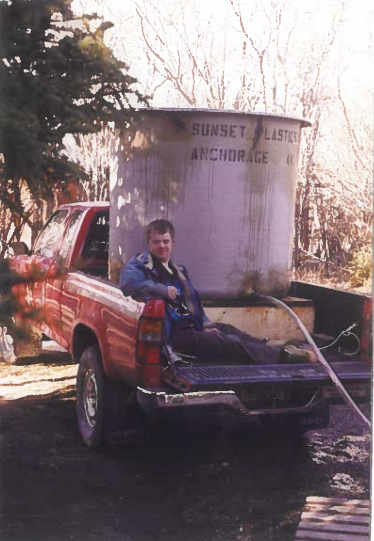
Erik was born in 1977, when his parents Steve and Linda were trapping in the Lake Clark area of Alaska. His first years were spent wrapped in a heavy sleeping bag, strapped in a wooden box on the top of a dog sled piled with all the family's worldly goods.
Life was hard for everyone. By the time Erik was three, the family moved into the fishing town of Dillingham, on the Bristol Bay coast, where his dad found work and they could buy food in a store instead of harvesting it from the wilderness.
Chapter Two
A Childhood in the Bush
Years later, his mom and dad split up, forcing his mom to return to life as a "bush teacher" in rural Alaska. Erik and his younger brother Christopher grew up moving from school to school across the state — seeing grizzly bears on the peninsula, caribou, trumpeter swans, ducks, moose, salmon, beluga, and killer whales, as their mother drew their attention to the natural beauty of Alaska's wilderness.
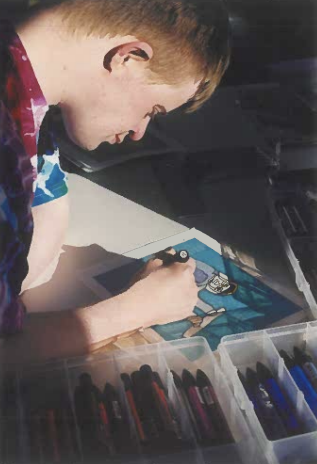
Most of his childhood was spent in the southwest bush of Alaska, with infrequent plane trips to Anchorage to buy supplies. Colors, coloring books, drawing paper, tracing paper, markers, paints, chalks — these were always purchased for him by his family, because he loved to spend hours in artistic endeavors.
No one realized he was teaching himself to draw, in the hours he spent each day looking at art, books, and the world he lived in.
Chapter Three · Kenny Lake School, 1997
The Awakening
Linda suspected Erik had an artistic gift when he entered high school, but couldn't prove it as only a mom. So she earned her fourth teacher's certificate and a master's degree in special education — pursuing it through ten years of night school and summer school at the University of Alaska, Anchorage. Having three titles — teacher, legal guardian, and mom — was the only way she could help him find a career he would truly love.
This opened doors with the Copper River School District. She returned to rural Alaska to teach, where Erik would be her student, and where she could finally test the dream of him becoming a professional artist.
Tests from his old high school had said Erik could do laundry as a profession. But he only wanted to work with his art pens. The blessing was a wonderful, dedicated teacher's aide, Linda Rutledge, who supported both Linda Thompson and Erik in this endeavor. They closely teamed up and continually held the dream for him.
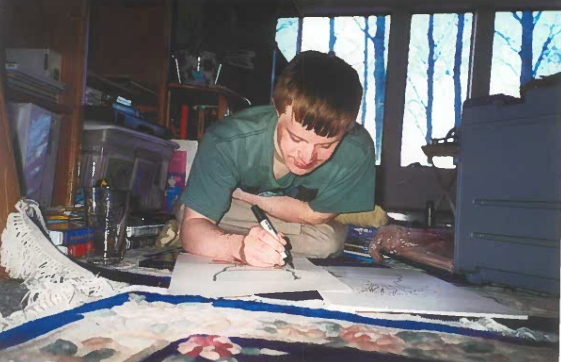
They placed white paper and black ink pens in front of Erik, along with piles of old library books filled with wildlife photographs of animals he had seen his entire life. Progress was shockingly fast. Soon other artists in the valley were telling them Erik was a "gifted" artist.
Even though his mom dreamed big, it was hard for her to forget the 20 years of people saying he was "severely retarded" and had no reliable future. From the time he was born, she had learned to ignore negativity.
Chapter Four · April 1998
The First Gallery
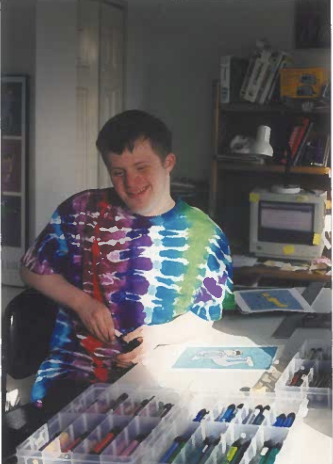
To fund his dream, Erik sold ice cream at school lunches to earn money for the best professional art markers and linen paper for his presentation portfolio. Between classes and a work-experience placement at a Glennallen grocery store, he worked on his art.
By April 1998 — just seven months after he drew his first original, The Big Eagle — Erik and his mother took his portfolio to Anchorage galleries in search of a market.
They met Diane Louise of Aurora Fine Art.
"I would like to be the first gallery to introduce Erik Behnke to the world."
Tears poured from Linda's eyes. Erik didn't understand why his mom was crying, so he cried too. Diane gave them both a big hug, and they began planning that summer's art opening.
The dream was coming true.
Chapter Five · 1998–2022
A Career in Color
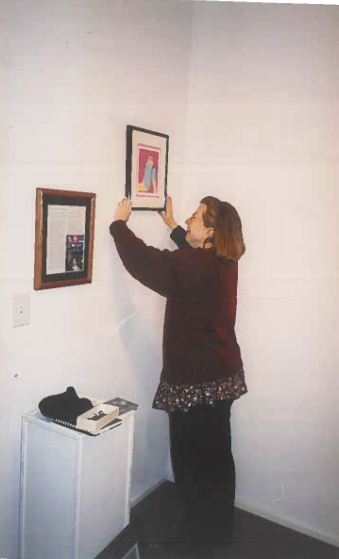
That spring, Linda set up the legal foundations of a business to market Erik's art and a special needs trust to financially benefit him. It was her hope that the business would not only support Erik but also the careers of other artists with developmental disabilities in the future.
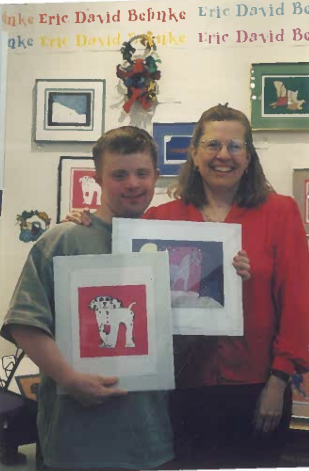
That summer, Erik had art openings in three Alaskan galleries — Anchorage, Glennallen, and Fairbanks. They returned to Kenny Lake School for his final senior year, and he continued long hours on his portfolio.
Once he graduated, Erik and his mother moved to Homer, Alaska in the summer of 1999, so that he could continue in an artistic and safe environment. Linda took a position at Homer High teaching intensive needs special education. All the supports Erik needed were in Homer, and both were very happy.
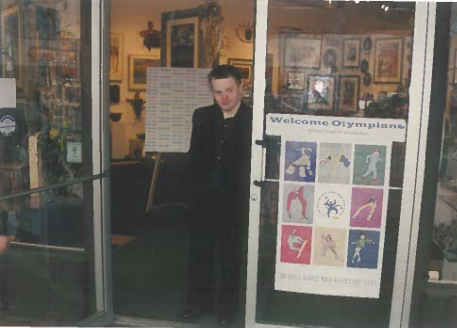
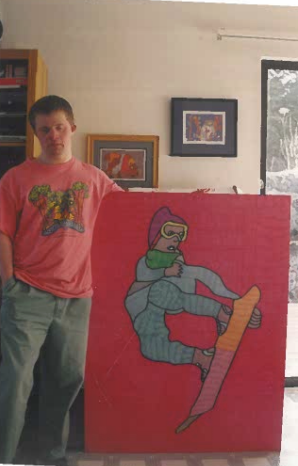
In 2001, Erik was the official artist for the Special Olympic World Winter Games — a defining moment in his career.
Over the years, his work was shown in galleries across the country: Boston, Manhattan, Long Island, Phoenix, Denver, Washington DC, Spokane, Portland, Seattle, Kansas City, Anaheim, and beyond. He loved to travel to his openings and share his art with the world.
In 2018, Erik moved into a group home and began working alongside another artist, Teresa Aldridge. They sold their paintings together at Fireweed Gallery and Brown Bear Products Gallery. Their final art show together — in the fall of 2022 — was a wonderful success.
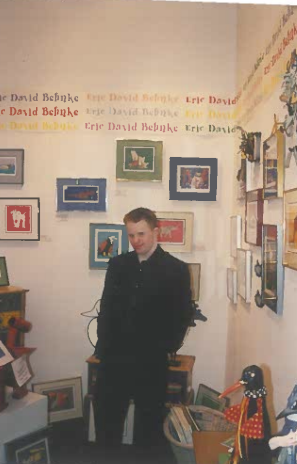
A Legacy
Twenty-Five Remarkable Years
Erik had a 25-year career as an artist in Alaska. Most artists with Down syndrome stop creating around age 35 — Erik continued happily until 45. He is the most successful artist with a severe disability in Alaska, and he served as a role model for his peers and for parents who hope to see what is possible for their own children.
He now lives in Kenai, Alaska.
Contact us
Have a question about Erik’s artwork or Linda’s books? Looking for help with an order or shipping details? We’d love to hear from you.
Please fill out the form, and we’ll get back to you as soon as we can.